Sunday, September 22, 2013

More Examples of How NOT to Teach Children About Slavery and two Positive Examples for Teens and Up

I was awakened rather early this morning by multiple text messages and phone calls from my sister and emails from friends about the episode below of the Melissa Harris Perry Show. I love this show. She is so good at publicizing the stories other news programs for one reason or another ignore.

Today's episode briefly discussed to recent incidents of what I like to call "when teaching about slavery goes wrong". In the coming weeks I hope to spend more time talking about good examples of teachers or programs that teach slavery intelligently. Today we will do two bad examples and one good.

The BAD

#1
MHP discusses an assignment her daughter received.

Visit NBCNews.com for breaking news, world news, and news about the economy

The curriculum her daughter used The Underground Railroad: Escape from Slavery by Scholastic.
What do you think of this curriculum and what it teaches?

#2
African American Connecticut 10 year old was made to take part in a slavery reenactment that included being called the N-Word, being told that she is not a person but property and... "dumb dark skinned negro person how dare you look at me". This program was called Natures Classroom. The purpose is to create experiential learning experiences for kids.

Visit NBCNews.com for breaking news, world news, and news about the economy

More about Nature's Classroom's past incidents. The article below is from the Southern Poverty Law Center's Teaching Tolerance cite. It poses several very interesting questions about experiential learning. For instance, are they really necessary in order to encourage a child to relate to a traumatic historical event? Could this type of learning traumatize or even re-traumatize young students who may not feel comfortable enough to say no to an authority figure?

"Classroom Simulations: Proceed With Caution"

"When Maya Saakvitne's parents sent her for a three-day school field trip two years ago at Nature's Classroom, a camp in western Massachusetts, they didn't expect her to come home with a tale of her feet falling asleep after counselors asked her to kneel in the hold of a make-believe slave ship. And keep her head down even though some of the other 5th-grade classmates from Jefferson Street Elementary School were crying. Nor that the same class later would sneak through the woods at night in a simulation of an escape along the Underground Railroad...

According to the curriculum for the Underground Railroad activity, the goal is 'to encourage students to think and act in ways that Africans trying to escape slavery thought and acted,' and to 'create a physically and emotionally safe, yet challenging experience.' This included a pursuit to freedom, where students encountered a bounty hunter to 'reinforce feelings of helplessness and frustration,'...

Some educators claim simulations have unparalleled power in sensitizing young people to oppression. But others, including prominent diversity education groups, say it's time to stop. Simulations, they say, are both dangerous and unnecessary."


The GOOD

#1
I cant wait to spend a bit more time digging into this. I have heard some great reviews so far. "The First Step to Freedom" the Schomberg's Emancipation Proclamation Curriculum "http://www.nypl.org/sites/default/files/ep_curriculum_guide_sc.pdf" 


#2
Ask A Slave!!!
So this is my new favorite webseries and one of the best things I have ever seen come out of historical interpretation. Azie Mira Dungey created and stars is this hilariously smart show about Lizzie Mae a young woman who is enslaved to George and Martha Washington. Dungey was a historical interpreter at Mount Vernon before moving to California and starting this webseries. The show is based off of her experience as an interpreter and the incredibly ignorant questions she was asked by visitors to Washington's historic home in Virginia.

Just watch!! First Episode

New episodes are up each Sunday. To watch more click the link above.


This show makes me laugh out loud every time. 


Especially this moment when she brings in a new guest on the show. He is an abolitionist who works for Prez Washington and has clearly never interacted with a black person before. After finishing his tea and deciding that she is some how both intelligent and well spoken, he asks to touch her hair. Now that I have gone natural I feel as though I have sat through this exact scene far too many times. See that look on her face? Yeeeeeah 


Friday, September 6, 2013

The Summer is Over!


Sadly, the summer is over and I have returned to Rhode Island and my last year of graduate school.
African Burial Ground in New York. I happened upon
it while walking back from the Trayvonn Martin Rally.

Well, I suppose I should say happily I have returned for my last year of graduate school.

When I Actually Make a Match.com Account
And See All My Matches
I am working hard to take that desperate need to start working, find a place to live a more permanent life and settle down into a nice box, duck tape it closed and shove it in my closet. It is for my own good.

It is time to prepare for that life but it is not time for it to be just yet. First I have to use my next two semesters to make sure I have the skills knowledge and connections that will ensure that I have job offers before graduation.

So, I have picked some new classes.
-Gravestones and Burying Grounds- Sounds like high excitement doesn't it? But it'll look good on my genealogy resume
- Shrine, House or Home: Rethinking the Historic House Museum - Confederate Daughters will love this when I shock them by not only applying to become a member but also find a job where I force them to reinterpret the many historic houses they run throughout the south
- Independent Project - I will talk more about this soon
- Practicum - Hmm still not sure where I want to do this. Work with an exhibition designer, the New England Genealogical and Historical Society or Ark Media again. Still thinking.

Oooh time to be very Rhode Islandy and run off to a boat party with the rest of the Public Humans.

Wednesday, July 24, 2013

The Magby Family History Timeline.

Can you believe it? An entire family's history all in one place! Photos, videos and stories, all in chronological order. I really love making these timelines. They allow me to take family history and put it into context with national, local and cultural events that would have effected the lives of our ancestors.

Just remember this timeline is a work in progress.

Do you have an event you would like added? Just leave a comment with the exact date and I will place it.


Friday, July 19, 2013

My great great uncle was Trayvon Martin: A historical unsolved murder

The post below was inspired by both the Trayvon Martin case and a question posed on a genealogy group I am a part of. The prompt from the group is below

Someone asks you to help them find family info, you give them the basics (census records, etc), they share this with their family. You get threatened by a family member and are asked to stop searching.

What do you do????


While doing my own genealogical research a few years back, I found out about a murder that everyone of a certain generation knew about but would not discuss. When I tried to ask about it I was always hushed and told not to ask any more questions or share the story. One relative suddenly acted like my asking about the murder would bring violent reprisals on the family. Right after I first heard the story, the local newspaper in my great grandparents hometown ran a 100th anniversary issue that discussed whatever the front page news was for that day 100 years before. The family murder story suddenly became front-page news...again.

Unfortunately, the modern day reporter was able to gather as few facts about the case from the record and descendants of those involved as the original reporter. In other words practically nothing. It seems like since it was a white man killing a black boy, none of the white people in town would discuss the matter and the black witnesses were neither quoted nor named. In fact there was only relative of the victim who would even speak to the modern reporter about it. You know, that cousin who is so old she has long since stopped caring about what other people think. I of course went to her too in search of answers. That’s when I finally heard the whole story. When I started to share what I had learned with my cousins, my only living great aunt jumped up and hushed me. She said we can’t talk about that because the murderer's family will come after us. She looked terrified. I got a similar reaction from other relatives her age. But who was going to come after us? The murderer died back in the 50’s.

Maybe its naïve but I share the story anyway… it is below without names.

The story: My great grandmother had 9 siblings. Her second oldest brother and her third oldest brother were picking beans for a white farmer in a tiny town in east Alabama in 1905. The younger brother who was about 12 at the time had been maliciously picked on a few times by the white overseer's son who was about the same age. That day the boy was picking on the younger brother again and this time he couldn't take it any more.  The younger brother spit on the overseer's son. The son started punching the younger brother. That’s when the older brother grabbed the overseer's son, pulled him off his little brother and punched him. When the boy fell out and started crying and yelling the two brothers took off running home.

Once they got home and told their mother what happened, she told the older brother to jump on the family mule and find the boys' father who was working on another farm a few miles away. All of the boys' younger siblings gathered on the porch with their mother to watch him leave on the mule. Suddenly the overseer rides up on his horse and shoots the older brother right off the mule with his shotgun. Then the overseer rides off out of town. The boys' mother runs to her son and he dies in her arms. This was all over a fight between two kids.

The overseer was never prosecuted for murdering my great great uncle. He was killed in front of his family including 6 of his younger siblings. Many of their children seem to have absorbed the trauma of that event and continue to live in fear of speaking about the incident, including my great-aunt.
According to the 100th anniversary article, several other "negroes", who had been picking beans alongside the boys, were questioned by the police. Unfortunately, their testimony never made it to court because the murder was never put on trial.

The cousin who told the story was actually the daughter of the baby the mother was carrying at the time. I heard the trauma and her grief at watching her teenage son die was so great that she almost lost the baby. Some of the descendants of this branch of my family are still very distrustful of white people. It's sad but when you add up all of the many terrible things that happened to them their fear, anger and frustration are understandable. Being a 20-something northerner it took a lot of time, research and patience to understand why my cousins continue to react the way they do to this story, and to their white neighbors. When you spend your life being pushed around and afraid to fight back; when all the adults tell you to turn the other cheek or you'll be killed; when you have to live down the street from and occasionally interact with the man who killed your brother/uncle/child and his relatives... then maybe that fear is justifiable.

I tell the story because distance and time give me the power to do so. If this was 1913 instead of 2013 or if the overseer's grandson was known to be just as ruthless as his grandfather, I would not be saying a word.

I write this little story not only in memory of my great great uncle Joe but also in memory of Trayvon Martin. 


Wednesday, June 12, 2013

Hot Times, Summer in the City: Their Child moves to New York and takes on 2 genealogy internships

I am now half way through my second week in New York... Oh, wait! I didn't tell you?

Marine archaeologists at work on the
slave ship Troubador's wreck site.
So, as a MA student in Brown University's Public Humanities program, I am required to take on a summer internship. Before coming to Brown my master plan had originally been to quit my job at the Smithsonian, quickly fly through my MA at Brown, and immediately return to the Smithsonian where I would jump into a job that would eventually funnel me into a curator position. So, I originally planned to do my summer internship back at my old museum job. I had grown interested in slave ship wrecks and fantasized about spending the summer months hunting through the archives of Capetown, South Africa, occasionally taking day trips to an actual shipwreck site to, if I was lucky, throw on a wet suit and dive.


But then... this past semester a series of unfortunate, but later turned out to be fortunate, events occurred that sent me spiraling headlong into some sort of pre-mid-life crises. Once I pulled myself together and reevaluated my goals, strengths, skills and passions I realized that I had a lot of incredible options I had been ignoring out of sheer faithfulness to my original goal. So instead of taking the safe route of returning to my old job and jumping into what would have been a perfectly interesting research internship in the curatorial department (which I had already done previously), I decided to stretch myself.

https://www.facebook.com/photo.php?fbid=380206192093397&set=a.313136025467081.74246.310790909034926&type=1&theaterI found an ad on Craigslist for an unpaid internship at a documentary film company. They wanted someone interested in working on Henry Louis Gates' upcoming black history mini series called Many Rivers to Cross. I jumped at the chance and immediately sent in my resume and cover letter even though the ad was 20 days old. When no one responded I started brainstorming new ways to get the internship anyway. Backup plan: Stalk Henry Louis Gates. I found an old friend from high school on facebook who was working in Brooklyn as a film editor and asked if he had any contacts at the company. Coincidentally he did and he sent my resume over right away.

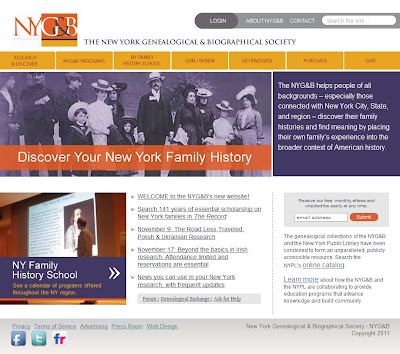
When a week went by without response, I went back to "da internets" and started looking for an internship related to genealogy. This would take me even further away from my old plans of becoming a curator, but I figured, why not see what happens? Besides I had told myself that I would be a certified genealogist by the time I finished my MA. I quickly found another NY internship. This time it was at the New York Genealogical & Biographical Society in Manhattan. The internship looked pretty amazing. Four days a week I would work on the society's genealogy related projects (tbd) then the fifth day I would work on a genealogy project based on my own family history. Pay-$100 a week :( but better than nothing.

I applied to the NYG&B then quickly emailed my friend in Brooklyn to ask if he had heard anything from his friend at Ark Media. Turns out there had been a little delay in turning in my resume. My friend sent his friend a reminder and by that afternoon they they had emailed me to do a phone interview! The interview went amazingly well. Even though they had already hired all the interns they needed on the original project they had a new project they thought may be a better fit. I was offered an internship to work on another Henry Louis Gates series for PBS, Finding Your Roots. I of course said yes! It was like a dream. I would be working on a genealogy television show! Then surprisingly the next day I had a very lovely phone call with a woman at the NYG&B and she asked me to intern with them too, even if only for one day a week. I was shocked. They wanted me to intern with them so badly even a few hours dedicated to their organization would be great. So of course I said yes! I could figure out the scheduling later.

So fast forward one month.....

I am half way through my second week in NY and I'm in love. Not with a handsome young man but with a city, and a life and two amazing opportunities. It has been a balancing act but I
am gonna make it.

More details to come!

Happy Loving Day!


As the descendent of at least two interracial couplings I have decided to celebrate Loving Day with a brief post. 

Loving Day is an unofficial holiday that has gotten a lot of attention in recent years. It celebrates the 1967 Supreme Court case Loving vs. Virginia in which Richard and Mildred Loving and their attorneys battled to end anti-miscegenation laws across the country. Richard and Mildred grew up as neighbors in a tiny rural town in Virginia. It was a mixed race community which appeared to generally accept the couple. Unfortunately, a few days after they were married the police came to their home in the middle of the night and arrested them for violating a state statute called the Racial Integrity Act of 1924. 


The law not only seperated all people into classes, white and colored (meaning all non-whites), it also made it illegal for any non-"white" person to marry a "white" person. I use quotes in this case because the racial category was defined by the one drop rule but could also be contradicted by the person's appearance. If you couldn't prove someone was not white, by locating colored relatives or documentation stating otherwise and they looked white, then they were white. 

The Lovings refused to annul their marriage so the plead guilty. In order to avoid spending at least a year in jail each, they moved briefly to Washington, DC to legalize their marriage. For years, the only way they could return to their hometown was after dark. 

For more info on the case please see the below links.
http://en.wikipedia.org/wiki/Loving_vs._Virginia

For more information on Loving Day celebrations:
http://www.lovingday.org/
http://en.wikipedia.org/wiki/Loving_Day
http://www.ledger-enquirer.com/2013/06/11/2541023/loving-day-is-june-12-marks-anniversary.html


The Loving's story and the court case are important to my family because we are descended on my mothers side from William Fortson a white son of a planter and slave owner and his former slave and common law wife Mertis Thomas. William and Mertis began their relationship before Emancipation and it continued into the early 1900's. Their relationship was frowned upon before Emancipation but a white man having children by his black slave was not uncommon. What made their relationship illegal was that he only lived with her, never marrying a white woman, and they appeared to have carried on their relationship in the open. They never officially married which was probably a good idea. In the late 1800's the consequences for attempting to marry a person of another race ranged from jail time, to high fines to physical violence from members in the community.

In 1967 Loving v. Virginia changed all of that, though there have been modern cases where pastors or judges have refused to marry interracial couples. These cases are generally looked down upon by the vast majority of Americans, especially younger generations.

So thank you Richard and Mildred for struggling against an unfair racist law and allowing more Americans to marry the person they love. Next stop marriage equality!

Love,

Their Child :)

Thursday, June 6, 2013

Preparing for the Family Reunion

The Magby Family Reunion Committee and I are in the final stages of preparing for the reunion. There is so much to do, and decide, and pay for. This is going to be an epic reunion.  I hear the elders in the family are counting down the days. Well I think most of us are.

I ran across the below PBS documentary and thought it was worth sharing. It premiers June 24th. It is called Homegoings. It is about an African American funeral director in Harlem, NY. Watching the trailer got me thinking about this reunion and the themes of both burial and resurrection. We expect a little over 100 people to join us Fourth of July weekend in Chambers County, Alabama, to put an end to a long standing familial separation. We will bury our collective strangeness and isolation. Together we will resurrect our one family, become a new clan, united by the blood flowing through our veins and hundreds of years of history in America. July 4th-7th will not just be a reunion it will be a Homecoming!


Watch Homegoings - Trailer on PBS. See more from POV.